Welcome to Hengtong Electric

Sales Hotline+86 183-6493-6808
Sales Hotline+86 183-6493-6808

 Binzhou Hengtong Electric Power Equipment Co., Ltd.
Phone: +86 183-6493-6808
Service: +86 183-6493-6808
Address: No. 112, Qianqiao Village, Haifeng Subdistrict, Wudi County, Binzhou, Shandong, China
PE pipelines have been widely used in the construction of urban buried gas transmission networks in recent years due to their advantages such as easy construction, lower engineering cost compared to steel pipes (below DN300), no corrosion and leakage problems, and low pollution to transported materials. Although PE pipelines have many advantages, their biggest weakness is their low strength. In previous municipal construction, the exact location of the pipeline was not very clear, and it was common for construction machinery to cut and leak, resulting in gas explosion accidents from time to time; In addition, due to the application of non excavation technology, various types of deep buried pipelines have emerged, which further increases the difficulty of detecting pipelines.
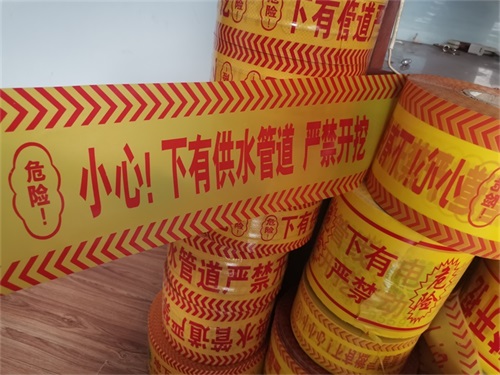
At present, when buried PE gas pipelines are buried underground, in order to avoid excavation detection and locate the position and depth of the PE pipeline in the future, according to the requirements of the "Urban Gas Design Code" GB50028-2006 and the "Construction and Acceptance Code for Urban Gas Transmission and Distribution Engineering" CJJ33-2005, a metal wire, namely a tracer wire, needs to be laid together with the buried PE pipeline. Tracer wire is a type of conductive metal wire woven from anti-corrosion treatment of metal wire. It is generally used in deep buried situations, closely attached to the pipe for laying. By connecting one end of the tracer wire to a pulse signal, the signal can be telemetry on the ground to determine the spatial position, depth, and direction of the pipeline.
In general, the tracer wire is laid outside the pipeline, but during non excavation construction of PE pipelines (directional drilling crossing construction), the tracer wire outside the pipeline is mostly pulled and cannot be used to apply signals to detect the position and depth of the pipeline, thus losing its function as a tracer wire.
In the existing technology, the introduction of metal tracer wire inside buried PE pipelines mainly uses steel plastic conversion joints of the pipeline. Without the design of steel plastic conversion joints, it is not possible to introduce metal tracer wire, resulting in phenomena such as breakpoints and incompleteness of the tracer wire in buried PE pipelines, which poses difficulties for pipeline detection and positioning in the future.

 Phone: +86 183-6493-6808
 Address: No. 112, Qianqiao Village, Haifeng Subdistrict, Wudi County, Binzhou, Shandong, China
 Binzhou Hengtong Electric Power Equipment Co., Ltd.
 ICP record: Shandong ICP 2022018583-1
Shandong Public Security Record 37162302000525

Scan this code in WeChat