Welcome to Hengtong Electric

Sales Hotline+86 183-6493-6808
Sales Hotline+86 183-6493-6808

 Binzhou Hengtong Electric Power Equipment Co., Ltd.
Phone: +86 183-6493-6808
Service: +86 183-6493-6808
Address: No. 112, Qianqiao Village, Haifeng Subdistrict, Wudi County, Binzhou, Shandong, China
Before laying the warning tape, the laying surface should be compacted, and then it should be laid flat directly above the pipeline. The distance from the top of the pipeline should be 0.3-0.5 meters, but it should not be buried in the roadbed and road surface.
The content of the warning tape must include: the name of the equipment ownership unit, danger signs, warning language, contact phone number, and design pressure level.
Tracer wire
When laying polyethylene gas pipelines, tracer wire should be laid at the top of the pipeline along with the direction of the pipeline. The tracer wire should use 2 × 2.5mm2 double wire single core copper wire with a well insulated protective layer on the outside. The tracer wire should be effectively connected, and the double wire winding soldering process should be used at the copper wire joint to ensure conductivity. Wrap the external insulation with tape and seal it with a heat shrink sleeve. The sealing end must be 20 mm larger than the tape wrapping end. Signal source wells should be installed every 2 km along the direction of the polyethylene gas pipeline. Inspection wells and other facilities can serve as signal source wells. There is a signal connector inside the signal source well, which is used to connect external signals for testing tracer wire. Electronic markers should be installed on gas pipelines. The memory of the electronic identifier can include the name of the pipeline ownership unit, pipeline diameter, installation or maintenance date, pressure rating system, name of the construction unit, and the relative position of the electronic identifier with the pipeline.
Electronic markers should be installed in the following locations:
Valves, water wells, sacrificial anodes, and other pipeline ancillary facilities.
At pipe bends, tees, and tees.
Other important positions that need to be marked.
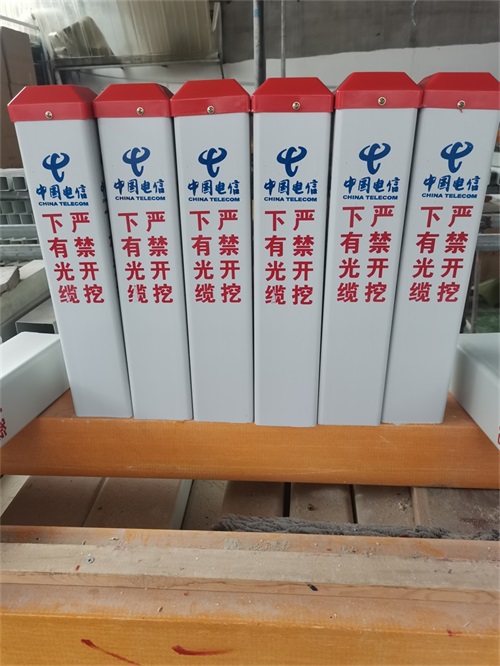
The buried spacing of electronic markers for straight sections of underground gas pipelines without the above installation points should be 100 meters. maintenance management
The identification should be classified, numbered, and registered in the file.
The identification of newly constructed pipelines and facilities should be designed, constructed, inspected, and delivered for use simultaneously with the main project.
When there are changes in the existing pipelines, facilities, and environment, the identification should be promptly added, removed, or changed.
The identification ownership unit should conduct synchronous inspections according to the pipeline inspection cycle to ensure that the identification is intact. When the identification is lost or damaged, it should be disposed of in a timely manner.
The identification content should be clear. It is recommended to paint once every two years.
This regulation uses this explanation
In order to facilitate differential treatment when implementing the provisions of this regulation, this explanation is used for those with different levels of strictness:
(1) Words that indicate strictness and must not be used: positive words use "must" and negative words use "strictly prohibited".
(2) Words that indicate strictness and should be used under normal circumstances: positive words use "should", negative words use "should not" or "should not"
(3) Words that allow for slight choices should be used first when conditions permit: positive words should be "appropriate" or "general", while negative words should be "inappropriate". It indicates that there is a choice and can be done under certain conditions, using "may".

 Phone: +86 183-6493-6808
 Address: No. 112, Qianqiao Village, Haifeng Subdistrict, Wudi County, Binzhou, Shandong, China
 Binzhou Hengtong Electric Power Equipment Co., Ltd.
 ICP record: Shandong ICP 2022018583-1
Shandong Public Security Record 37162302000525

Scan this code in WeChat