During the handover of gas PE pipeline operation, there are 5 compliance checks for the tracer wire: ① Whether the signal connection point is present and installed correctly.
② The detection signal can be loaded onto the tracer wire, but there are too many faults and severe leaks in the middle, and there is no detection well in the middle The tracer wire was installed, with the beginning and end cut and suspended in the air, without contact with the ground. The tracer wire in the middle valve well was not fixed. ④ The diameter of the tracer wire is too small to meet the transmission requirements of the detection signal, and it is easy to be cut off by construction or damaged by natural stress.
⑤ The surface markings of PE pipelines are buried based on installation memory impressions, with insufficient density and significant deviation.
There are five main reasons why the detection signal cannot be continuously unblocked: ① The wires in the tracer wire are not connected, causing an open circuit. ② The tracer wire was not insulated and waterproof, causing a short circuit in the signal Insufficient conductive area of metal wires leads to high signal transmission resistance and high signal attenuation The tracer wire itself is not qualified, and the wire is broken and discontinuous. ⑤ The first and last ends of the tracer wire were not connected, fixed or grounded, cut or buried, and the head could not be found.
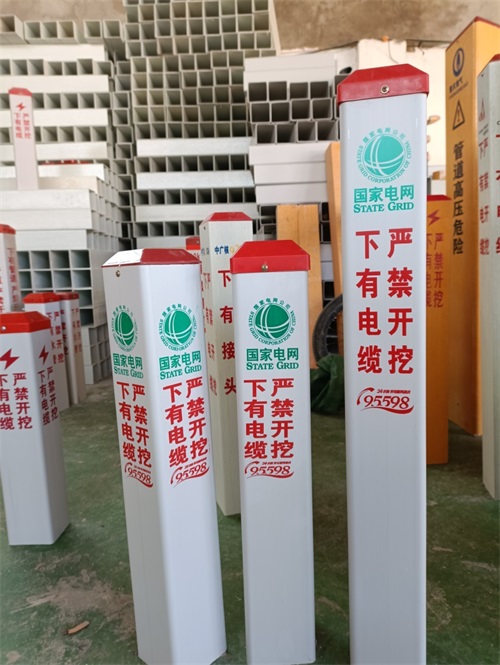
No exposed detection signal source. The PE pipeline tracer wire does not have a signal contact design or is not installed according to the contact design. Many units bury the tracer wire joint directly below the ground or wrap the tracer wire joint directly on the pipeline or equipment during the installation of the tracer wire. In a short period of time, the tracer wire joint will be lost, resulting in the entire tracer wire losing its function.
The area is too small and the strength is not enough. The selection of the cross-sectional area of the metal wire is incorrect. Before selecting the tracer wire, it is necessary to first determine which detector to use. Different detectors have different detection principles and methods, and targeted tracer wire need to be selected. The selection of the cross-sectional area of metal wires requires selecting the type of metal wire and the cross-sectional area of the wire based on the signal strength of the detector signal generator and the required detection distance of the pipeline. In general, a 2.5mm2 copper core wire can have a detectable distance of 500-1000m at once. The direct method will go further, and there is rarely a phenomenon of pulling and breaking during construction.
Replace the tracer wire with a warning tape. Replacing tracer wire with warning tapes and not laying them according to standard requirements.


 Binzhou Hengtong Electric Power Equipment Co., Ltd.

 Phone: +86 183-6493-6808
 Address: No. 112, Qianqiao Village, Haifeng Subdistrict, Wudi County, Binzhou, Shandong, China
 Binzhou Hengtong Electric Power Equipment Co., Ltd.
 ICP record: Shandong ICP 2022018583-1
Shandong Public Security Record 37162302000525