Principle of pipeline tracer wire test
Copper clad steel is a metal core composed of steel core wire and copper layer tightly wrapped around it. The outer side is PE anticorrosive coating. Copper plays the role of conducting weak electrical signals, and steel wire plays the role of support. Copper core wire is generally composed of inner copper core wire, intermediate insulating sheath and outer protective sheath. Copper clad aluminum is composed of aluminum core wire and copper layer tightly wrapped to form metal core, and the outer layer is PE anti-corrosion layer.
As the outer anti-corrosion coating of steel gas pipeline is plastic layer or coating with insulation and anti-corrosion performance, its structure is similar to copper-clad steel, copper core wire, copper-clad aluminum and other outer layers, which are also plastic layers with insulation and anti-corrosion performance Therefore, we use two equivalents and PCM pipeline current decay rate method to test the average insulation quality of the anti-corrosion coating of the tracer wire.
The detection principle is to apply a certain frequency current signal to the tracer wire, and the current will gradually decay when it is transmitted from the tracer wire to a distance. Its attenuation is related to the insulation resistivity of the plastic layer of the tracer wire. The higher the average insulation resistivity of the tracer wire plastic layer, the slower the current attenuation, and vice versa.
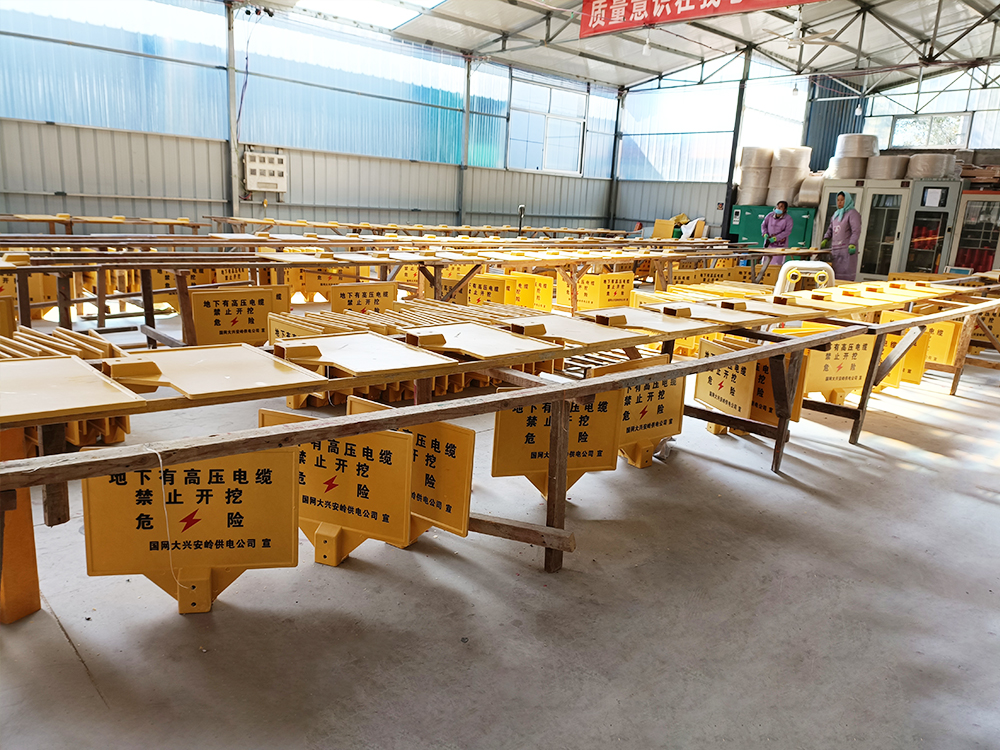
Test method for pipeline tracer wire
In order to ensure the conductivity, strength, corrosion resistance and durability of the tracer wire, it is generally recommended to select multi strand copper wire with a cross-sectional area greater than 2.5 mm, and try to keep the tracer wire at the top of the pipe when laying. At the branch, the insulation layer of the conductor joint shall be stripped, the copper core shall be twisted together for several turns, and then the joint shall be wrapped with insulating tape to maintain good conductivity.
A certain amount of thread end allowance shall be reserved for the tracer wire, and the thread end shall not be covered by soil or sundries. In order to reduce the grounding resistance at the end of the tracer wire that cannot be grounded, it is necessary to ground the exposed core wire 30 cm after stripping the insulation layer. Measures: for PE pipes laid by directional drilling, strong conductors shall be used to avoid being broken during construction, which will make it impossible to detect and locate; When the diameter of the conductor is much smaller than the buried depth and the medium change of the ground medium and air is ignored, the trace line can be regarded as an infinite line in homogeneous medium.
The above is the relevant content of the question answer. I hope it can help you. If you still have any questions about this problem, you are welcome to follow our website http://webtest2.daoshangbao.cn And consult our staff, will serve you wholeheartedly.


 Binzhou Hengtong Electric Power Equipment Co., Ltd.

 Phone: +86 183-6493-6808
 Address: No. 112, Qianqiao Village, Haifeng Subdistrict, Wudi County, Binzhou, Shandong, China
 Binzhou Hengtong Electric Power Equipment Co., Ltd.
 ICP record: Shandong ICP 2022018583-1
Shandong Public Security Record 37162302000525