The previous PE pipe was non-conductive and non-magnetic, so it was impossible to track the pipe, which was very troublesome for daily maintenance, and the gas tracer wire solved the problem that non-metallic pipelines could not be detected by metal pipeline finder. Let's talk about the development, function and laying precautions of gas tracer wire.
Development of trace line
1. First generation tracer wire: it is composed of aluminum foil and plastic film. Aluminum foil is mainly used to transmit signals, and the matrix is fixed aluminum foil. Disadvantages of this tracer wire: the strength of aluminum foil is very low, which is easy to break even in the process of production and transportation, and the auxiliary equipment is easy to be damaged. At the same time, the resistance of aluminum foil is very large, and the effective detection distance and depth are limited.
2. Second generation trace line: it is pressed by steel wire and plastic film. The trace line is made of steel wire as the conductor, with high resistance and limited detection distance, which is difficult to meet the actual needs.
3. Third generation tracer wire: it is composed of copper-clad steel metal wire core and PE outer protective layer, and its appearance is linear.
Function of tracer wire
"Tracer wire" is used for the detection, tracking and positioning of PE pipes. "Tracer wire" is laid together with PE pipe; Generally, metal wire cores are used to apply signals to the "metal wire" through the detection equipment, and the detection receiver receives the signals, so as to find the accurate position of the tracer wire, that is, synchronously track to the specific position of the PE gas pipeline; In order to facilitate the transformation and maintenance of PE pipes.
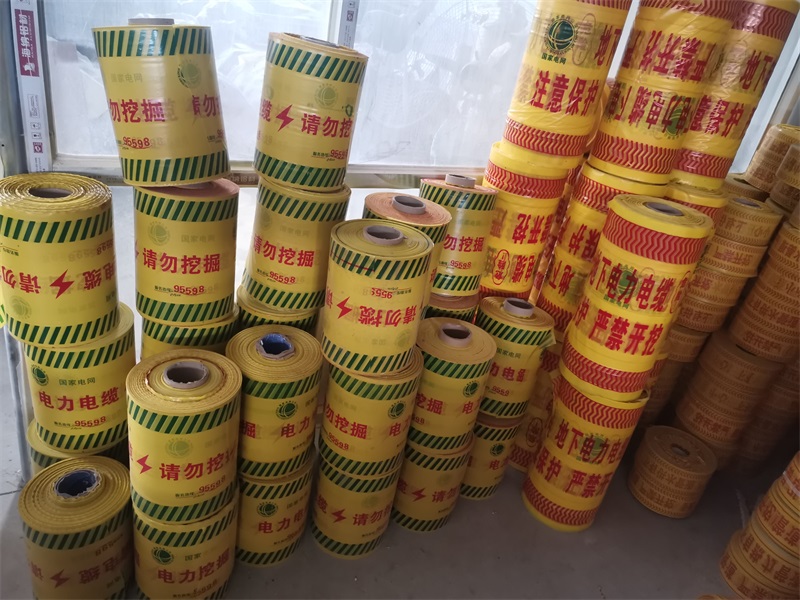
Precautions for laying tracer wire
1. When embedding the trace, it should be close to the PE pipe in a straight line and located on the top of the pipe. Do not spiral wrap it on the PE pipe for embedding, which will easily lead to inaccurate detection results.
2. A certain length of wire (more than 1m is appropriate) should be reserved for the tracer wire at the inspection well or the place where it goes out, for the detection of applied signals. This can improve the detection efficiency and accuracy.
3. The tracer wire joint or branch point must be firmly connected, maintained in good conductivity, and wrapped with insulating tape to prevent corrosion and disconnection caused by underground humidity, so as to interrupt the detection signal. The tracer wire at the steel plastic conversion joint of the pipeline can be welded on the flange, and the joint shall be subject to anti-corrosion treatment to prevent corrosion and disconnection in the future.
4. In order to increase the signal strength of the tracer wire and make the signal distribution uniform, the grounding resistance of the buried end of the tracer wire must be minimized during construction, and good grounding measures of stripping the insulation layer and exposing the core wire for 30 cm shall be taken. Especially for the end of the branch pipe with short length, it must be well grounded, otherwise the signal on the branch will be very weak and cannot be detected.
5. If the buried length of the pipeline exceeds 1 km, and there is no inspection well and other facilities in the middle to reserve tracer wire ends to meet the needs of detection, it is recommended to set up a test pile every kilometer and reserve tracer wire joints for detection.
6. In the construction of trenchless engineering, the tracer wire outside the PE pipe is easy to be broken during the dragging process. A simple way is to choose a conductor or steel wire rope with larger cross-sectional area and higher strength, or pre thread a tracer wire inside the pipe to avoid the breakage. Its detection effect is the same as that outside, but when doing so, it is necessary to deal with the connection between the internal tracer wire head and the external tracer wire.
7. In some special cases, the tracer wire cannot be applied to PE pipes. At this time, the method of embedding tracer balls can be used to meet the needs of detection and positioning in the future.
The above is all about the problems and precautions introduced to you today. I hope it can help you. If you want to know more, you can contact us by phone or follow our website http://webtest2.daoshangbao.cn , our staff will contact you in time.


 Binzhou Hengtong Electric Power Equipment Co., Ltd.

 Phone: +86 183-6493-6808
 Address: No. 112, Qianqiao Village, Haifeng Subdistrict, Wudi County, Binzhou, Shandong, China
 Binzhou Hengtong Electric Power Equipment Co., Ltd.
 ICP record: Shandong ICP 2022018583-1
Shandong Public Security Record 37162302000525